Picture a kitchen table in Miami Gardens on a Saturday night in November. The mail from the whole week is in one pile, a shoebox of receipts is in another, and somewhere in a bedroom drawer is a letter that will matter in April. Nobody lost that letter. It just never had a home, so it landed wherever the day ended. Tax season feels hard for most families for exactly this reason: the papers arrive one at a time, all year, and each one gets put somewhere different.
The fix is not a filing cabinet and it is not a weekend of sorting. The fix is one folder with a rule so small you cannot fail it.
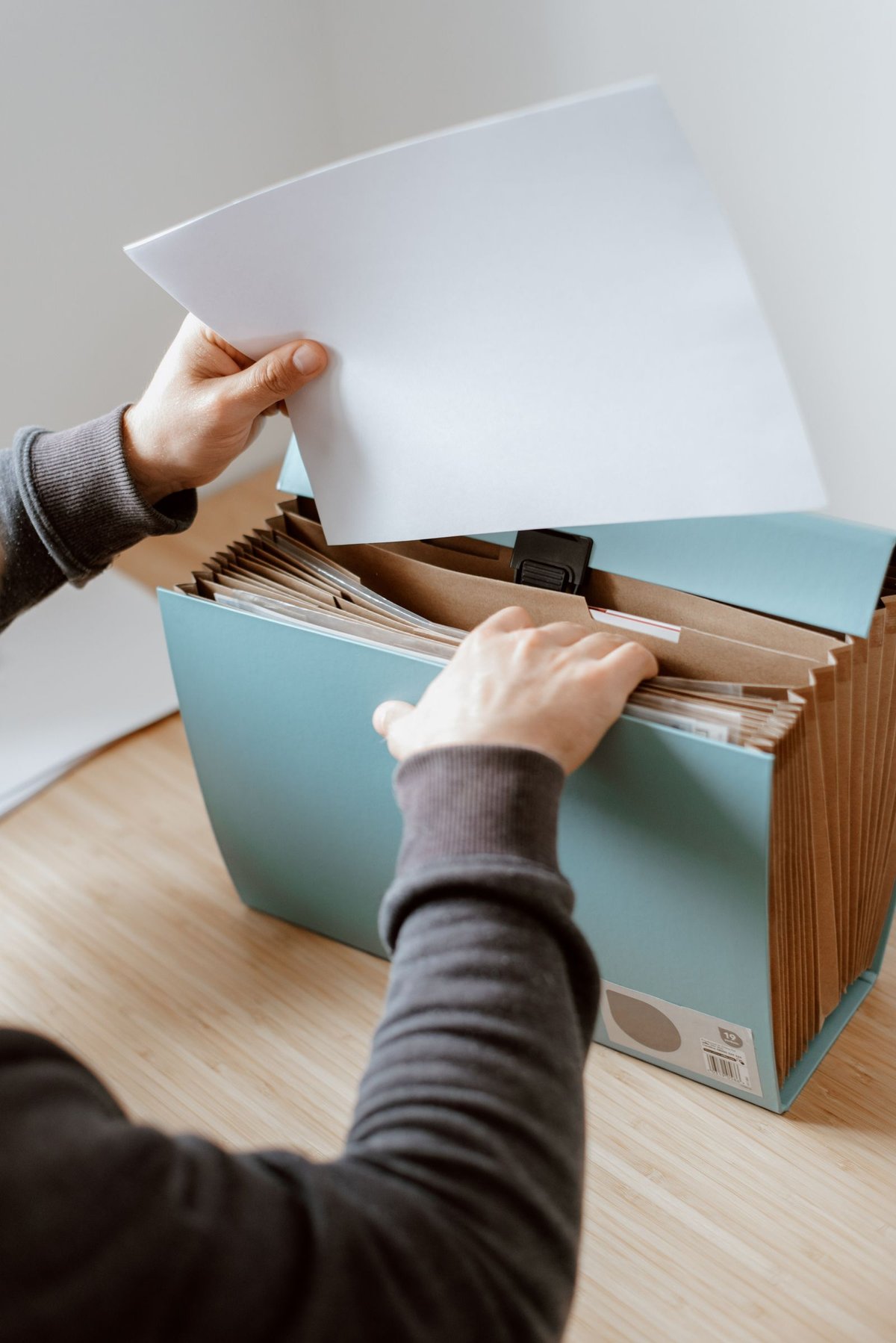
Buy one folder — an accordion folder (a folder with expanding pockets inside, like a small bellows) is best — and label five pockets: Income, Work, Money out, House, and Letters. Every paper that touches taxes goes into that folder the same day it reaches you, in whichever pocket fits, even if you are not sure it matters. That is the whole system. Ten minutes to set up, about two minutes a week to keep, and at filing time you hand over one folder instead of hunting through the whole house.
Why do tax papers cause a scramble every single year?
Because they do not arrive at tax time. They arrive all year, dressed as ordinary mail. A pay stub in March. A donation receipt in June. A letter about a side job in October. The famous forms — the W-2 (the paper your job sends each January that lists what you earned and what tax was already taken out) and the 1099 (the form that reports money paid to you outside a regular job, like freelance or contract work) — mostly land in January. But the proof behind them has been drifting into your house for twelve months.
Here is the same idea a second way, because it is the heart of this post. Think of the folder as a mailbox that only accepts tax mail. Mail does not wait until you feel ready; it shows up daily, and the mailbox catches it whether you are having a good week or a bad one. Your folder does that job for paper. It catches each document on the day it arrives, so April never has to go looking for March.
And one more picture, from the kitchen. A scramble happens when every ingredient sits in a different room and you start cooking at 6 p.m. The folder is mise en place — a French cooking term chefs use for setting every ingredient in one place, measured and ready, before the heat goes on. Filing is the cooking. The folder is the prep you did a little at a time, all year, without noticing.
What exactly goes in each pocket?
- Income: W-2s, 1099s, pay stubs you want to keep, and any letter that says money came to you.
- Work: papers about a job or a small business — mileage notes (a simple list of work trips and miles), receipts for tools or supplies you bought for work, and class or license fees.
- Money out: donation receipts from a church or charity, medical and dental receipts, and child care receipts with the provider's name.
- House: mortgage or rent papers, property tax bills, and big repair receipts.
- Letters: anything from the IRS (the Internal Revenue Service, the federal tax agency) or your state tax office — opened, read, and filed the same day, even if the answer is "not yet."
Notice what is not on this list: perfection. If a receipt could fit two pockets, pick one and move on. A paper in the wrong pocket of the right folder is still a paper you can find in under a minute. A paper in the perfect mental category, sitting in a drawer, is gone until spring.
What is the two-minute rule that keeps the folder alive?
Paper goes in the same day it arrives, and it takes about two minutes: open it, glance at it, drop it in a pocket. That is roughly 2 minutes a week across a year — about 100 minutes total, spread so thin you never feel it. Compare that with the usual alternative: 4 to 6 hours in one April weekend, on your knees, checking coat pockets and glove boxes while a deadline breathes on you. Same papers. Same total work, almost. The only difference is when you pay it — in coins all year, or in one heavy bill at the end.
Two habits keep the rule standing. First, the folder lives where mail lands — by the door or on the kitchen counter, not in a closet. A folder you have to walk to is a folder that gets skipped. Second, snap a phone photo of anything thin and easy to lose, like a gas-station-style receipt that fades. The paper stays in the pocket; the photo is your backup copy.
Watch the folder system set up on a real desk
What the video shows, in plain words: Jessi Fearon shows the exact system this post is built on, at her own desk. At the start of the year she takes one plain file folder, writes the year and the word "taxes" on it, and keeps it in a desktop organizer where she can reach it without standing up. All year, every paper that touches taxes — a receipt, a form, a letter — goes straight into that one folder the day it shows up. No sorting party, no color codes, no second system to keep up. She also shows a simple spreadsheet where she notes deductible expenses (money you spent that the tax rules may let you subtract from your income) as they happen, so the numbers are written down while she still remembers them. Her point, start to finish: the folder works because it asks almost nothing of you.
How long should you keep the folder after you file?
Longer than feels natural. The IRS's own recordkeeping guidance says to keep tax records for at least 3 years after you file in most cases, and longer in some — for example, records about property are kept until years after the property is sold. So when filing is done, the folder does not go in the trash. Write the tax year on it, move it to a box or a shelf, and start a fresh folder for the new year. One box slowly filling with labeled years is what "having your papers together" actually looks like in a real house.
The tool that holds the list for you — and the humans behind it
Empowerment Buddy is AI plus humans working behind the process: the tools keep the lists and the reminders, and real people check the work with you. Our Tax Organizer CRM is the folder system with a memory: it holds your checklist of what should be in the folder, tracks what has arrived and what is still missing, and gives you one clean packet to hand over at filing time. It costs $19.99 a year. When filing day comes, we refer you to a real tax provider who prepares and files your return — Empowerment Buddy does not file taxes, and we hold no PTIN or EFIN (the federal ID numbers a person or firm needs to prepare or send tax returns for pay). Your folder stays yours; the organizer just makes sure nothing in it gets forgotten.
The bottom line
Tax stress is rarely about taxes. It is about paper that never had a home. One folder, five pockets, two minutes on the day each paper arrives — that is the entire system, and it turns filing from a house-wide hunt into a single hand-off. Set the folder up this week, while November is calm, and let it quietly do its work all year. See the Tax Organizer CRM and the rest of the Buddy tools, or keep reading: how to apply for SNAP benefits online and how to build a $500 starter cushion on a tight paycheck.
Keep reading: all Empowerment Buddy deep-dives